But again thanks to Claudia Zachariassen and David C. Kelzenberg for providing these recordings, and also thanks to Claus Byrith for the digital transfer and audio restoration.
Friday, 15 June 2012
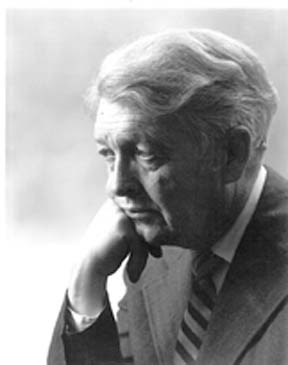
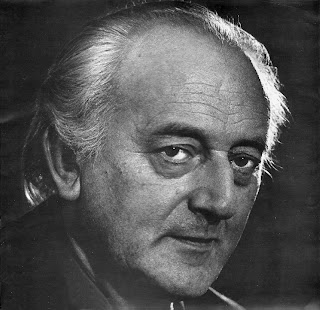
Unique recordings with Helmut Walcha and Günther Ramin
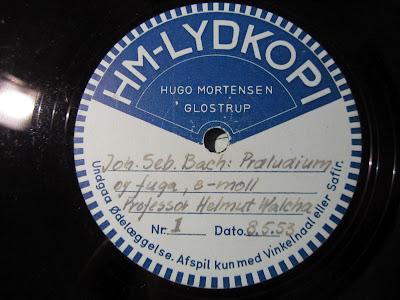
But again thanks to Claudia Zachariassen and David C. Kelzenberg for providing these recordings, and also thanks to Claus Byrith for the digital transfer and audio restoration.
Wednesday, 25 January 2012
Kevin Bowyer playing K. S. Sorabji - Organ Symphony No. 1
“For those interested in such matters, Kaikhosru Shapurji Sorabji was born in Chingford, Essex, England on 14 August 1892; his father was a Zoroastrian Parsi civil engineer and his mother English (for a long time, until the work of Sean Vaughan Owen, she was reputed to be part Sicilian, part Spanish). He spent most of his life in England. From his early ’teens he developed an insatiable appetite for the latest developments in contemporary European and Russian music and went to great lengths to obtain the latest scores of such composers as Mahler, Debussy, Schönberg, Skryabin, Rakhmaninov and others at a time and in a country where almost all such music was largely unknown and unrecognized. Of an independent and uniquely curious nature, it is perhaps unsurprising given the pre-War English environment that his education, both general and musical, was mostly private.
For a composer as prolific as he was soon to become, he was an unusually late developer and his voracity in absorbing all the most recent trends in other people’s music seems to have excluded from his mind the idea of making his own until he reached his twenties.
A close friend and confidant of the English composer Philip Heseltine from 1913, Sorabji wrote to him that he was considering a career as a music critic. Once he had begun to compose, however, the floodgates of his imagination burst and a tremendous river of musical creativity flowed forth almost uninterrupted until the early 1980s.”
(http://www.sorabji-archive.co.uk/biography/biography.php - Alistar Hinton)
Kaikhosru Sorabji might not be a household name not even in the organist community but nonetheless it is closely connected with the organist Kevin Bowyer, who has championed the music for over a quarter of a century, and he is the only organist in the world who has played Sorabjis music on a bigger scale.
Kevin Bowyer writes about his relationship with the symphony and the performances:
“The playing history of the First Organ Symphony (1923/4, published 1925 by Curwen) before Århus is as follows:
1928 - E Emlyn Davies, a harmony professor at the Royal Academy of Music, played the middle movement in a recital at the Westminster Congregational Chapel. The audience included Sorabji himself (who was very pleased with it) and also the 26 year William Walton, who enjoyed it greatly and wrote to Sorabji to tell him so. Sorabji was so pleased with the performance that he dedicated his Second Organ Symphony (1929-32) to Davies. (The Second Symphony (unpublished), at over 8 hours duration, is the longest fully notated organ piece ever composed (so far as we know) and remained unplayed in its entirety until I did it in Glasgow in 2010).
A performance of the First Organ Symphony was planned to take place in Glasgow in 1931, played by two players at the piano, but never took place. As far as we know, there were no further performances at all until:
July 25, 1987 - The first complete performance. Holy Trinity Sloane Street, London. The idea was to have three organists play, taking a movement each. Thomas Trotter opted to play the middle movement and I was asked to play either the first or the last. Three months later, when no other player had volunteered, I was asked to play the remaining movement too, so the first performance consisted of me playing movts. 1 and 3, and Thomas playing movt. 2.
1988 - Århus - the first complete performance by a single player.
Since then I have played the First Symphony complete in Linz, Malmø, Darmstadt, Manchester and Glasgow.
I met the composer in January 1988 and went to see him five times before his death in October 1988, aged 96.”
- Kevin Bowyer
As mentioned above much of Sorabjis music is of immense proportions. The present release consisting of the organ symphony no. 1 plays two hours (45 minutes alone for the third movement). The music is intriguing and compelling not alone in its size but also harmonics and structure. Sorabji never seems to run out of ideas or thematic material.
It is some of the most complex music ever composed for one musician to play, so just calling it a virtuoso organ piece would not be a proper description and calling Kevin Boywer “just” a virtuoso organist (which he by any standard is!) would also not be a fulfilling description. What Kevin Bowyer has done here is by any measure of the highest order - mentally, musically even physically speaking – and not many, if any, organists is capable of playing this music.
On the technical side recordings do not have to be mono and with far from high fidelity sound quality to be historical. This recording is indeed historical even though it is only 24 years old.
It was recorded on April 24th 1988 in Aarhus Cathedral as part of the annual NUMUS Festival in the city (a festival dedicated to contemporary music). Thanks to former cathedral organist Anders Riber for providing this recording.
Thanks also to Kevin Bowyer and Alistar Hinton curator of the Sorabji Archive. For those interested in learning more about Sorabji, the website for the Sorabji Archive is highly recommendable – http://www.sorabji-archive.co.uk. Worth mentioning is also Kevin Bowyers vast project to play, publish and record Sorabjis three organ symphonies - http://www.sorabji-organ.org.
Monday, 18 July 2011
Robert Noehren playing works by Johann Sebastian Bach

Robert Noehren (1910-2002) was an influential American organist with a broad interest in organ building, performance practice and writing.
He was named “International Performer of the Year 1978” by The American Guild of Organists, and in that connection I’ve found this short biography (http://216.137.149.180/IPYA/NoehrenR.html):
“Robert Noehren (December 16, 1910 – August 4, 2002) enjoyed a long and distinguished career as international recitalist, recording artist, scholar, author, and teacher. He was for many years University Organist and Head of the Organ Department at the University of Michigan. His discography numbers over 40 recordings, from earlier vinyl LPs to a number of CDs made late in his career. Among his many honors were the French Grand Prix du Disque for his recording of the Bach Trio Sonatas. His interest in historical organ building led to numerous trips to France, Germany, and Holland, and the establishment of his own organ building company, where he designed and built some 20 large pipe organs, including a four-manual organ for the Cathedral of St. John in Milwaukee, Wisconsin. Active up until the day of his death, Noehren practiced every day, had plans to make another commercial recording on the large organ he built for First Presbyterian Church, Buffalo, New York, was writing a cook book, and was preparing a lecture for the convention of the American Institute of Organbuilders. He was also a serious composer, having studied with Paul Hindemith.”
This recording was made in Kenmore Presbyterian Church in Buffalo, N.Y. in 1951 on an organ build by Schlicker in collaboration with Robert Noehren. I’ve inserted the back cover of the LP below.

In many respects his organ playing resembles that of Helmut Walcha. It’s clear, intelligent, fluent and a bit restrained. The performances are logical and performed with great control and with a delicate sense for lines and polyphony. The slow movements are beautifully shaped with a very vocal phrasing and the fast movements are never rushed.
Monday, 2 May 2011
Feike Asma & Hans Vollenweider playing works by J. S. Bach and F.Mendelssohn-Bartholdy

(http://www.netreach.net/~druid/LV/FeikeAsma.html)
“The Swiss organist, Hans Vollenweider, was brought up in an artistic atmosphere, his father being a well known painter and publisher. He commenced his organ studies when he was 15 with Victor Schlatter and Ernst Isler. In 1936 he took his first organ post at the local church, whilst studying at the Music Academy, Zürich. Three years later he graduated from the Academy with great success and after some recital work studied with Karl Matthaei, a pupil of the great organ virtuoso Karl Straube. In 1943, at the age of 25, Hans Vollenweider took an appointment as church organist in Zürich and soon began to travel extensively both as a virtuoso and as a teacher. He was ranked among the leading organists in Europe. His travels have frequently brought him to this country and in 1961 he went to Michigan University, USA, to hold master-classes. He broadcast and recorded extensively; and divided his time more or less equally between the harpsichord and the organ, and composing - mainly choral and chamber works.. He also held a teaching post in Organ and Harpsichord at the Zürich Music Academy.”(http://www.bach-cantatas.com/Bio/Vollenweider-Hans.htm)
Download detailed playlist
Download link:
www.ihorc.com/ihorc/IHORC-27/IHORC-27_-_Feike_Asma_and_Hans_Vollenweider.rar
Monday, 21 March 2011
Olivier Messiaen plays Olivier Messiaen part 3
This is the third and penultimate release with Olivier Messiaen playing his own works for now. The last works missing is his “Messe de la Pentecôte” and his “Livre d’Orgue”. Oliver Messiaen also recorded the “Méditations sur le mystère de la Sainte Trinité”, but since it was composed in 1969 it was from obvious reasons not included in the 1956 recording sessions. He recorded the “Méditations” in 1972, but we’ll have to wait until 2022 for a public domain release of that.“Identifying Messiaen as a romantic performer may seem surprising, when so many think of him as the ultra-modernist who, for example, did so much to introduce total serialism in composition. And yet, he admitted plainly: "I'm not ashamed of being a romantic. The romantics were magnificent craftsmen . . . The romantics were aware of the beauties of nature, of the grandeur of divinity; they were grandiose, and many of our contemporaries would gain from being 'romanticized.'
Download detailed playlist
Download link:
www.ihorc.com/ihorc/IHORC-26/IHORC-26_-_Messiaen_plays_Messiaen_3.rar
Tuesday, 22 February 2011
Olivier Messiaen plays Olivier Messiaen part 2
The second part of the complete Olivier Messiaen plays Olivier Messiaen consists of Apparition de l’Èglise éternelle and Les Corps Glorieux. As mentioned in the first release, I’m very reluctant in naming the definitive renditions of any works, but Messiaens own interpretation of the Apparition is simply amazing. His tempo is extremely slow but never dragging and his overall musical perception of the piece is so incredible grand.
Olivier Messiaen (1956) 10:05, Latry (rec. 2000) 9:45, Rudolf Innig (1996) 9:16, Jennifer Bate (1982) 10:00, Susan Landale (1986) 7:36, Thomas Trotter (1993) 9:48, Louis Thiry (1972) 8:01.
The overall timing of a piece doesn’t directly tell anything about the actual tempo (or tempi) in a piece. There are many other factors in play, just listen to the very big pauses Messiaen has between some of the sections, but the overall timing can tell us a little of the performers overall grasp of the whole piece.
Thanks again to Anders Riber for providing the transfers of these important documents. No digital noise reduction has been applied, so there is a little background hiss and click here and there.
Friday, 31 December 2010
Olivier Messiaen plays Olivier Messiaen part 1
Olivier Messiaen (1908-1992)Messiaen entered the Paris Conservatoire at the age of 11 and was taught by Paul Dukas, Maurice Emmanuel, Charles-Marie Widor and Marcel Dupré, among others. He was appointed organist at the Église de la Sainte-Trinité in Paris in 1931, a post held until his death. He taught at the Schola Cantorum during the 1930s where one of his students was Georges Savaria. On the fall of France in 1940, Messiaen was made a prisoner of war, during which time he composed his Quatuor pour la fin du temps ("Quartet for the end of time") for the four available instruments—piano, violin, cello and clarinet. The piece was first performed by Messiaen and fellow prisoners for an audience of inmates and prison guards. He was appointed professor of harmony soon after his release in 1941, and professor of composition in 1966 at the Paris Conservatoire, positions he held until his retirement in 1978. His many distinguished pupils included Pierre Boulez and Yvonne Loriod, who became his second wife.”
(Source: Wikipedia)
"Granted, the 1956 recordings are not without their flaws. The sound is monophonie (even though stereo was available then), and the fidelity merely adequate - certainly no match for the extraordinary engineering that Mercury Living Presence recordings had already achieved at that time. Also, the organ is in a poor state of repair: sometimes painfully out of tune (the coupled-flutes solo in Diptyque becomes excruciating, as can most registrations with mutations or mixtures) with some poor regulation (the 16' Basson solo low C doubles down something fierce), dead notes (treble D disappears from the Tierce in the monophony of "Offertoire" from Messe de la Pentecôte, p. 4), and sometimes inadequate wind (e.g., the sagging final chord of "Dieu parmi nous"; it figures that if seven stops and a pneumatic lever were added to an organ without increasing its wind capacity, there could be trouble!).”
(http://findarticles.com/p/articles/mi_7161/is_200811/ai_n32307468/)
Some critics say that Messiaen wasn’t really an organist and therefore his rendering of his organ music cannot be trusted as his original intentions. Some critics say that they lack on the technical side simply that Messiaen wasn’t technically up for the job playing his organ music. I think both arguments are quite simply wrong. It’s clear that Messiaen plays his works with brilliance, deep understanding, and he is all the way through technically in total command. When he chooses to go alternative ways compared to the text, it’s because he want’s to do it that way. I don’t like to hail any recording as the definitive recording, but these recordings are a fascinating view into the musicianship and aesthetic of Olivier Messiaen.
Download detailed playlist
Download link:
http://www.ihorc.com/ihorc/IHORC-24/IHORC-24_-_Messiaen_plays_Messiaen_1.rar