Posts

Unique recordings with Helmut Walcha and Günther Ramin
Image
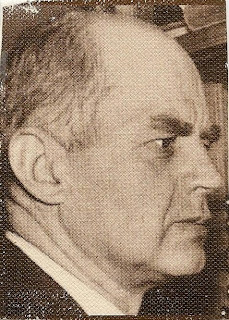
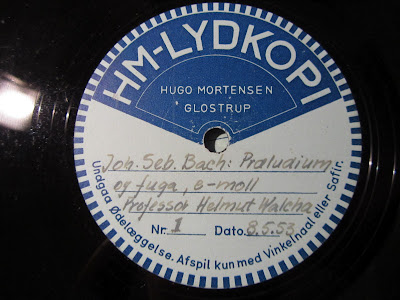
I am proud to be able to present three very unique organ recordings. Thanks to a generous contribution from Claudia Zachariassen, the owner of the Marcussen organ building firm, I can present two live recordings with Helmut Walcha and Günter Ramin. They were recorded on two Marcussen organs: at the concert hall at the Danish "Statsradiofonien" (Danish Broadcasting Corporation, on its former location in Copenhagen) May 8th 1953 with Helmut Walcha playing, and the other during the inauguration concert of the organ in Göteborg concert hall April 28th 1937 with Günther Ramin. They were cut on acetate discs most likely from a radio transmission and presented to the former owner of Marcussen Sybrand Zachariassen (1900-1960), so they most likely only exist in this exact copy. The third recording is a contribution from David C. Kelzenberg (Iowa, USA). It is Helmut Walcha playing the “Ricercar á 6” from “Das Musichalishes Opfer” by J. S. Bach. This recording was done privately...

Kevin Bowyer playing K. S. Sorabji - Organ Symphony No. 1

Image
Kaikhosru Shapurji Sorabji – Organ Symphony No. 1 (1922/23) “For those interested in such matters, Kaikhos ru Shapurji Sorabji was born in Chingford, Essex, England on 14 August 1892; his father was a Zoroastrian Parsi civil engineer and his mother English (for a long time, until the work of Sean Vaughan Owen, she was reputed to be part Sicilian, part Spanish). He spent most of his life in England. From his early ’teens he developed an insatiable appetite for the latest developments in contemporary European and Russian music and went to great lengths to obtain the latest scores of such composers as Mahler, Debussy, Schönberg, Skryabin, Rakhmaninov and others at a time and in a country where almost all such music was largely unknown and unrecognized. Of an independent and uniquely curious nature, it is perhaps unsurprisin g given the pre-War English environment that his education, both general and musical, was mostly private. For a composer as prolific as he was soon to become, he w...

Robert Noehren playing works by Johann Sebastian Bach

Image
Robert Noehren (1910-2002) was an influential American organist with a broad interest in organ building, performance practice and writing. He was named “International Performer of the Year 1978” by The American Guild of Organists, and in that connection I’ve found this short biography (http://216.137.149.180/IPYA/NoehrenR.html): “Robert Noehren (December 16, 1910 – August 4, 2002) enjoyed a long and distinguished career as international recitalist, recording artist, scholar, author, and teacher. He was for many years University Organist and Head of the Organ Department at the University of Michigan. His discography numbers over 40 recordings, from earlier vinyl LPs to a number of CDs made late in his career. Among his many honors were the French Grand Prix du Disque for his recording of the Bach Trio Sonatas. His interest in historical organ building led to numerous trips to France, Germany, and Holland, and the establishment of his own organ building company, where he designed and bui...

Feike Asma & Hans Vollenweider playing works by J. S. Bach and F.Mendelssohn-Bartholdy

Image
I’m now able to present two new organists to IHORC, the Dutch organist Feike Asma (1912-1984) and the Swiss organist Hans Vollenweider (1918-1993). "Forever closely associated with the organ of the Great Church of Maassluis (near Rotterdam) is the name of Feike Asma. In 1927, Asma succeeded his father as organist of the Reformed Church of Den Helder. He played the organ of the Hooglandse Kerk in Leiden from 1933 to 1943, afterward moving to the historical organ of the Lutherian Church in The Hague. Asma served as organist here for a period of 22 years, gracing the services and giving many recitals. In 1965, Asma became organist at Maassluis until his death in 1984, again playing for services and in numerous recitals. In the notes to the last recording issued during his life, Mr Jan Quintus Zwart characterised Osma in these words: "Over half a century, organ virtuoso Feike Asma has achieved his own place among Dutch organists. While giving so many recitals, he was as...

Olivier Messiaen plays Olivier Messiaen part 3

Image
This is the third and penultimate release with Olivier Messiaen playing his own works for now. The last works missing is his “Messe de la Pentecôte” and his “Livre d’Orgue”. Oliver Messiaen also recorded the “Méditations sur le mystère de la Sainte Trinité”, but since it was composed in 1969 it was from obvious reasons not included in the 1956 recording sessions. He recorded the “Méditations” in 1972, but we’ll have to wait until 2022 for a public domain release of that. I’ve already covered many sides of the circumstances connected with these recordings, so I’ll again let Timothy Tikker speak. This time it's concerning the interpretations by Olivier Messiaen, and also draw attention to his excellent article from The American Organist (Nov 2008): “Identifying Messiaen as a romantic performer may seem surprising, when so many think of him as the ultra-modernist who, for example, did so much to introduce total serialism in composition. And yet, he admitted plainly: "I'm not...

Olivier Messiaen plays Olivier Messiaen part 2

Image
The second part of the complete Olivier Messiaen plays Olivier Messiaen consists of Apparition de l’Èglise éternelle and Les Corps Glorieux. I discussed the technical and historical details in the first release, so I’ll not go into these details again. As mentioned in the first release, I’m very reluctant in naming the definitive renditions of any works, but Messiaens own interpretation of the Apparition is simply amazing. His tempo is extremely slow but never dragging and his overall musical perception of the piece is so incredible grand. In fact looking over just a few other recordings of this piece puts Messiaens version as the slowest: Olivier Messiaen (1956) 10:05, Latry (rec. 2000) 9:45, Rudolf Innig (1996) 9:16, Jennifer Bate (1982) 10:00, Susan Landale (1986) 7:36, Thomas Trotter (1993) 9:48, Louis Thiry (1972) 8:01. The overall timing of a piece doesn’t directly tell anything about the actual tempo (or tempi) in a piece. There are many other factors in play, just listen to the...

Olivier Messiaen plays Olivier Messiaen part 1

Image
Olivier Messiaen (1908-1992) Olivier Messiaen hardly needs any introduction at all. He was one of the most influential composers of the 20th century and organist at Trinité in Paris for 61 years! Here is a little excerpt from Wikipedia anyway: “Olivier Messiaen; December 10, 1908 – April 27, 1992) was a French composer, organist and ornithologist, widely regarded as one of the major composers of the 20th century. His music is rhythmically complex (he was interested in rhythms from ancient Greek and from Hindu sources); harmonically and melodically it is based on modes of limited transposition, which he abstracted from his early compositions and improvisations. Many of his compositions depict what he termed "the marvellous aspects of the faith", and drew on his deeply held Roman Catholicism. He said he perceived colours when he heard certain musical chords, particularly those built from his modes (a phenomenon known as synaesthesia); combinations of these colours, he said, wer...

The Complete Charles Tournemire - remastered by Charles Lever

Image
I’ve been rereleasing some recordings before, but I’ve never rereleased a whole set of recordings before. The reason why I’m rereleasing the Complete Charles Tournemire is because the present transfer is simply the best restoration of I’ve ever heard. The original 78s are from the collection of Michael Gartz, who has been a great supporter of this site and is remastered by Charles Lever. When you remaster old recordings, you are always faced with problems concerning how much noise you are going to remove and how much equalization you are going to make. When you remove noise, you always remove a little bit of the music as well. So when you restore old recording, you are in fact interpretating the music as well; you can alter the actual the timbre of the instrument and you can “color” nuances as it fits you – in other words it is basically up to the aesthetics of the audio technician how the music is going to sound! I’ve heard many(!) transfers of old recordings, some are completely free...

Jeanne Demessieux, Günther Ramin and Páll Isólfsson (recordings from the 1950s)

Image
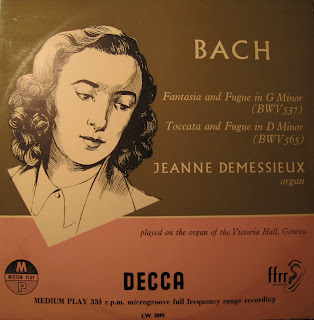
This release consists of three sets of recordings. First we have yet another release with the ever inspiring Jeanne Demessieux playing the infamous J. S. Bach Toccata and fugue in d and the J.S. Bach Fantasie and fugue in g-minor from Victoria Hall in Geneva. She recorded several times at Victoria Hall in Geneva. These two pieces were recorded in September 1953 and released on Decca in 1954 on a 10 inch LP. Her version of the Toccata and fugue in d-minor is simply the most electrifying version, I’ve ever heard, and I’ve heard many recording of this piece – it rivals Alfred Sittards great rendition of it from 1928 in Hamburg. The next two items are Günther Ramin playing Max Reger, a Deutsche Grammphon 10 inch LP from 1958. The cover states, “Thomaskantor Günther Ramin an der Beckerath-Orgel”, but it doesn’t state where, and I simply can’t find out. I’ve searched the internet, so please help me here… I found a not-so-fond-of review from The Grammophone, July 1958, which among other thin...

Marcel Dupré in Queens Hall - 1926-27

Image
Now it’s time for another Marcel Dupré release. This time is probably some his earliest recordings made in Queens Hall, London in 1926 and 1927. Marcel Dupré marked in many ways the “modern” way of playing, and he was immensely popular everywhere he played and most definitely also in England. HMV was, as far as I know, the first European record company who seriously made organ recordings. I think it was due to the fact, that many of the organists in England were very popular to the people in general. The many concert hall organs popularized the organ and organ music, and many organists could fill concert halls with an enthusiastic audience. So in England were a broad marked for selling organ recordings. A lot of these recordings are, taken the age in consideration, of very high quality and the sound is remarkably clear. One easily forgets that the recordings are over 80 years old. These recordings are important of several reasons. First of all they document the organ at the old Queens...

Various organists playing organ works by Johann Sebastian Bach

Image
This is the 20th release and to celebrate this I’ve chosen different works by J. S. Bach played by five different organists. As you can see, there are two duplicates; the Alfred Sittard and Fernando Germani have already been released (IHORC-02 and IHORC-11) but the transfer was made from other 78rpms which are of a quality worth presenting here. Looking back over the 20 releases here on IHORC, it’s very clear that recording organ works J. S. Bach for an organist of that period was standard, and the repertoire is quite broad. Of course there are numerous versions of the famous Toccata and Fugue in d minor, but about all genres of his organ works are represented here in some form or another. All the organists tried their hands on the “big ones”, but they also ventured into the more elusive parts of his organ production, e.g. Heitmann recorded the “Kunst der Fuge”, Walcha the “Schübler Chorales” (on the other hand Walcha has recorded the complete works twice, so he is a little out of the...

Charles-Marie Widor - The complete recordings

Image
Charles-Marie Widor (1844-1837) was and still is like Louis Vierne, one the most important organ composers and all organists know that he was organist at the famous Saint-Sulpice in the heart of Paris for 64 years. With the help from the organ builder Aristide Cavaillé-Coll he became a student of Jacques-Nicolas Lemmens and was later to become professor at the Conservatoire in Paris succeeding César Franck. Through his work as a teacher, he defined the way of organ playing, a tradition and style which is still alive today. As an advocate of the instruments of Cavaillé-Coll, he helped to inaugurate several very important instruments, such as Notre-Dame de Paris, Saint-Germain-des-Près, the Trocadéro and Saint-Ouen de Rouen. Like Louis Vierne, his influence cannot be underestimated. We are so fortunate, that he did choose record 6 sides for the French department of HMV (called “La Voix de son Maître”) in 1932, the year before he retired. It’s quite obvious, that he or his recording compa...

Louis Vierne - The complete recordings

Image
Louis Vierne (1870-1937), the famous organist of Notre Dame de Paris, hardly needs any introduction. As a student of César Franck and Charles-Marie Widor he quickly rose to fame and became assistant to Widor at Saint Sulpice in 1892. From 1900 until his death in 1937 he was titulaire at Notre Dame de Paris. Louis Vierne’s importance as an organist and composer cannot be underlined enough. His musical legacy is immense – just think of how many of his works are in the core of the standard repertoire of every organist. So it’s with great pleasure, that I’m now able to present one of the most legendary cycle of organ recordings. These recordings were made in November 1928 and allow us to listen to the almost intact Cavaillé-Coll organ from 1868. As far as I can read, the only modifications made until 1928 was done by Louis Vierne in 1902. The recorded repertoire is typical for the period. There is a collection of smaller pieces by J. S. Bach, a single piece by Vierne himself and three impr...

Helmut Walcha playing works by Johann Sebastian Bach part 3

Image
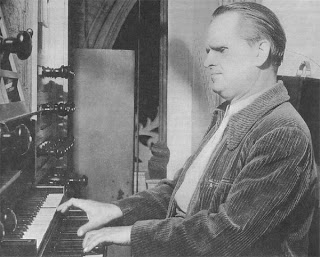
We continue with the third part with Helmut Walcha playing J. S. Bach from Sct. Jacobi Kirche, Lübeck and Cappel. Again, like IHORC-16, it’s from his first cycle of the complete J. S. Bach from 1947-52. The Toccata, Adagio and fugue in C major, BWV564 and Toccata and fugue in d minor are recorded in Sct. Jacobi, BWV565 while the Fantasia and fugue in g minor, BWV542 and the Pastorale, BWV590 are from Cappel. The real gem in this release is the Pastorale, where he shapes the pieces with much grace, and we really get to hear the beautiful flute stops of the organ. A bit unlike other his interpretations he fires up the drama in the BWV565. Thanks again to Claus Byrith for this release. The picture is Helmut Walcha playing the organ in Alkmaar. Download detailed playlist Download link: http://www.ihorc.com/ihorc/IHORC-17/IHORC-17_-_Helmut_Walcha_3.rar

Helmut Walcha playing works by J. S. Bach part 2

Image
This is the second release with Helmut Walcha. This time it's from his first cycle of the complete J. S. Bach recordings from 1947-1952. The “Sei gegrüsset” and the “Schübler chorales” are recorded at the Stellwagen organ Sct. Jacobi in Lübeck in 1947 and the Preludes and Fugues from 1952 at one of the most important Schnitger organs situated in Cappel. This release is also interesting due the historic importans of two instruments used. This link provides a good insight on the organ of Cappel, and the author of this blog even quotes some text from the original Walcha release. http://mypipeorganhobby.blogspot.com/2009/10/cappel-st-peter-und-paul-1680-schnitger.html I’ve found som info about the Stellwagen organ in Sct. Jacobi Kirche, Lübeck: Die kleine Orgel (Stellwagenorgel, Nordorgel) ist deshalb kulturgeschichtlich von allergrößtem Wert. Das gotische Blockwerk von 1467 baute Friedrich Stellwagen 1636/37 zum Hauptwerk mit Schleif-Windladen um und fügte Rückpositiv, Brustwerk und...

Helmut Walcha playing organ works by Johann Sebastian Bach

Image
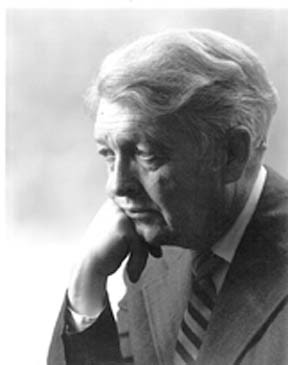
Helmuth Walcha (1907-1991) It’s now time for a release with the famous German organist Helmut Walcha. This is the first of initially 4 releases with Walcha playing J. S. Bach. He recorded the complete works by J. S. Bach twice, from 1947-1950 in mono on the Schnitger organ in Cappel and in St. Jakobi in Lübeck and 1956-1971 on the famous organ in Alkmaar. This release is from the Alkmaar serie and is therefore in stereo. A quite interesting thing is to compare it with the IHORC14 release, where Fernando Germani plays the exact same organ about two years later. The next part is from Wikipedia: Helmut Walcha (October 27, 1907 in Leipzig, Germany – August 11, 1991 in Frankfurt am Main, Germany) was a blind German organist who specialized in the works of the Dutch and German baroque masters and is known for his recordings of the complete organ works of Johann Sebastian Bach. And whom, despite being blinded at 19 by smallpox, is considered one of the great teachers and performers of the or...

Fernando Germani playing organ works by Johann Sebastian Bach from Alkmaar

Image
Even though I try to present a variety of different organists, the field of historical organ recordings often has its own life, where recordings surface and disappear. Fernando Germani recorded a great deal of music, and his recordings were released in quite big numbers and were well distributed worldwide due to his “big name” in the recording industry. In retrospect it’s therefore quite easy to aquire his recordings. That is why I am able to present the fourth release with him. This time it’s one of the LPs from his legendary recordings at the fabulous Schnitger organ in Alkmaar, Holland. Fernando Germanis organ playing is always great to listen to, but I would especially recommend his version of the Passacaglia, which in my opinion is one of the best ever to be put on record. It has the rythmical intensity and big lines typical for Germani coupled with a really fine sense for registrations. Some technical details; I could not find the exact release date and year for this recording, a...

Anton Nowakowski playing organ works by Johann Sebastian Bach

Image
Anton Nowakowski (1897-1968), the master pupil of Straube and Fritz Heitman (who were friends of Max Reger) is one of the outstanding German organists. Born in Danzig in 1897, he became famous both as a teacher at the German Academy of Music in Prague and the Essen Folkwang school and as an organ soloist. In addition, thanks to the encouragement from Wilhelm Furtwängler, he achieved considerable fame in Danzig and Berlin as an opera conductor. Anton Nowakowski died in 1968. These recordings were released on several LP’s over a span of some years. I’ve located some rather different reviews of these recordings, and chosen the earliest review from The Gramophone, July 1955: “Nowakowski is a new name to me; and I do not recall having heard the Danish instrument on which he plays so skillfully. It has brightness and clarity, with a remarkably well-balanced ensemble and a fascinating array of colour. The mixtures are especially satisfactory, and add top to the tuttis without overpowering the...